
Reframing Methadone Stigma: A Palos Heights Recovery Perspective
You take your dose, you go to work, and you handle what the day asks of you. Then…


 Medically reviewed by Erika Steinbrenner
Lea McMahon, LPC, EdD, serves as Chief Operating and Clinical Officer at Symetria Recovery. She holds a Doctorate of Education from Argosy University and Licensed Professional Counselor credentials in Texas and Louisiana. With 24 years of experience in behavioral health and addiction treatment, Lea designed and built the clinical model Symetria uses today and led the organization's adoption of its harm reduction philosophy. She previously held Corporate Compliance Director positions at Elements Behavioral Health and Groups Recovery Together, and has taught psychology, humanities, and organizational leadership at Columbia College since 2013.
Read Less →Finding out you are pregnant while living with opioid use disorder (OUD) can bring fear and guilt. You might worry that treatment for OUD might bring harm to your baby. It does the opposite. Getting treatment is one of the most protective steps you can take for both of you. You can begin that care with a Symetria Recovery medication-assisted treatment program that coordinates with your prenatal team.
So can you take Suboxone® (buprenorphine-naloxone) while pregnant? National health authorities now recommend medications for opioid use disorder (MOUD) throughout pregnancy. A 2025 review of hospital care for pregnant and postpartum patients appeared in the American Journal of Medicine Open. It points to about 60% lower odds of opioid overdose death when MOUD continues after delivery.
This article walks through what current guidance says about Suboxone® and Methadone in pregnancy, what to know about breastfeeding and newborn withdrawal, and how to start care close to home.
Buprenorphine, the medicine in Suboxone®, is recognized by federal health authorities such as the Centers for Disease Control and Prevention (CDC) as a first-line treatment for opioid use disorder in pregnancy. Whether it is right for you is a decision you make with your prenatal care team.
The CDC’s guidance on treating opioid use disorder before, during, and after pregnancy, updated in May 2026, names Methadone and buprenorphine as the first-line medications in pregnancy. It also states plainly that quickly stopping opioids during pregnancy is not recommended. The National Institute on Drug Abuse and the Substance Abuse and Mental Health Services Administration agree, and both frame the decision as one made with your care team.
Taking Suboxone® while pregnant becomes a conversation about the right medication and dose for you. You’ll coordinate the decision with your OB-GYN.
If you already take Suboxone®, your provider will talk with you about the safest option for the rest of your pregnancy. For years, providers often moved patients to a buprenorphine-only medication, once sold under the brand Subutex, which is no longer manufactured.
More recent guidance has shifted. A 2025 review in American Family Physician found that buprenorphine-naloxone can be used in pregnancy, with an obstetric safety profile similar to the alternatives and a lower rate of newborn withdrawal. The point for you is simple: you have options, and your provider will help you weigh them.
Your provider will most likely advise you not to stop buprenorphine treatment while you are pregnant. When you first learn you are pregnant, you may feel an urge to taper off Suboxone® right away. That urge usually comes from stigma, not from what is best for your baby.
The 2025 hospital-care review found that stopping opioids in pregnancy carries a high risk of return to use. Other risks include low birth weight, preterm labor, and fetal stress. Staying in treatment protects you both.
Your care team will encourage breastfeeding if you are settled on a medication for opioid use disorder such as Methadone or Suboxone®. Only small amounts of buprenorphine pass into breast milk, and the LactMed database, updated in 2026, describes breastfeeding as acceptable for parents stabilized on it.
Breastfeeding supports your baby’s nutrition and can ease newborn withdrawal. If you return to opioid use, talk with your provider, since formula may become the safer choice.
Safety Warning: Combining Suboxone® with benzodiazepines (such as Xanax or Valium), alcohol, gabapentinoids, or other sedating medications significantly increases the risk of respiratory depression and overdose. Tell your provider about all medications you take, including over-the-counter drugs. Your provider will work with you to manage these safely. Your care continues, and your treatment plan may be adjusted to keep you safe. All patients starting Suboxone® should have naloxone available at home in case of emergency.
Methadone is recommended during pregnancy by major health authorities, including the CDC. People who stay on Methadone during pregnancy are more likely to get prenatal care. They’re also more likely to deliver in a hospital, which improves outcomes for parent and baby.
A 2025 study in JAMA Network Open found that pregnant patients on medication for opioid use disorder stayed in treatment longer than those who were not. It is also associated with lower rates of preterm birth and low infant birth weight. Methadone also helps stabilize the pregnancy by keeping opioid levels even, supporting steadier fetal growth.
Both Methadone and buprenorphine are recommended in pregnancy, and neither is a fallback for the other. Each has strengths your provider will weigh with you.
Buprenorphine tends to involve fewer drug interactions, more stable dosing across pregnancy, and milder newborn withdrawal. A 2024 study in JAMA Internal Medicine found that first-trimester buprenorphine carried a lower risk of birth malformations than Methadone.
Methadone has a longer track record of data on infant and child outcomes, and it does not carry the risk of precipitated withdrawal when you start it. Methadone is often the better fit if buprenorphine has not worked for you, if you have a buprenorphine allergy, or if you have done well on Methadone before. You’ll work with your care team to find out which medication works best for you.
If you take Methadone during pregnancy, you may need a higher dose or a split dose, especially in the third trimester. Split dosing means taking about the same total amount, divided into two doses a day instead of one. Your medical team decides this with you.
Do not be afraid to take the dose you need. The right dose is the one that fully controls your withdrawal. Keeping the dose too low to try to prevent newborn withdrawal is not recommended and can lead to return to use. Studies on whether a higher methadone dose worsens neonatal abstinence syndrome (NAS) have had mixed results, so guidance focuses on keeping you stable rather than minimizing the dose. Split dosing has also been linked to lower NAS rates.
Methadone has been used since the 1970s, and its effects in pregnancy are well studied. The data show no increase in birth anomalies among babies born to parents using Methadone compared with the general population.
Methadone may briefly slow fetal heart rate and movement, usually about four hours after a dose, and this is not known to harm the baby. Compared with untreated pregnancy, babies exposed to Methadone are less likely to be born premature and less likely to develop NAS. When NAS does happen, it is often milder, and breastfeeding can help.
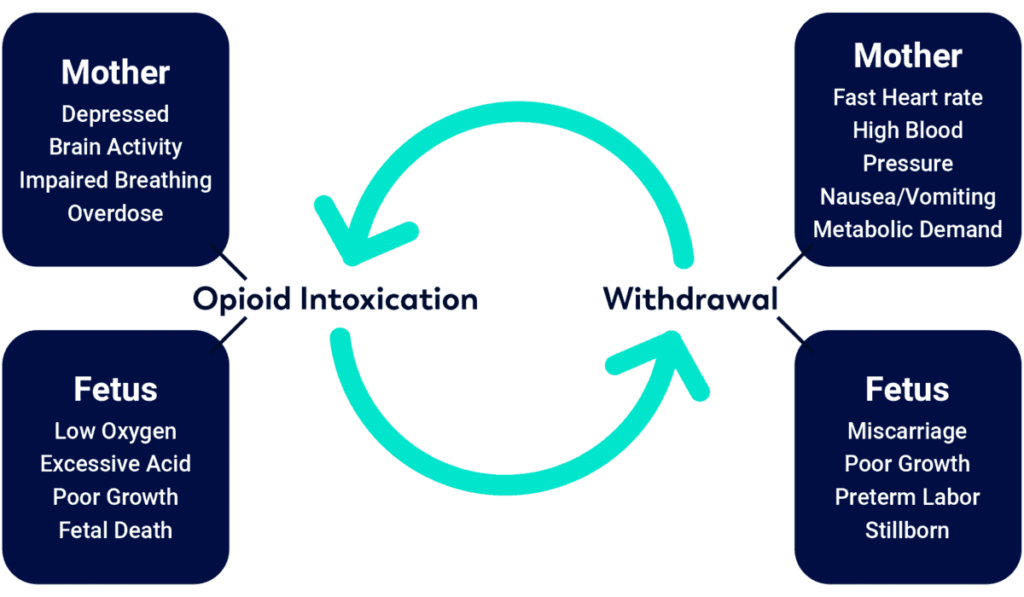
Stopping opioid use during pregnancy without medication and medical oversight is dangerous. The 2025 hospital-care review found that abrupt withdrawal in pregnancy carries a high risk of return to use. Severe withdrawal affects the baby, too. This is why the CDC advises against quickly stopping opioids in pregnancy.
A return to use is hard to resist during withdrawal, and pregnancy adds physical and emotional strain that makes it harder still. Overdose risk is also highest right after a withdrawal attempt. Staying in treatment is far more likely to prevent a return to use than trying to quit alone.
Withdrawal can also hit harder because pregnancy already taxes your body. If you cannot eat or sleep and feel intense anxiety, your baby feels that distress, and they can go through withdrawal as well. Starting care at a clinic means less sickness and a better chance at lasting recovery.
Not every treatment program accepts pregnant patients, but you have options, including outpatient care at Symetria Recovery. Even if you have already used opioids during this pregnancy, getting medical help now can protect your pregnancy and your family. There is no shame in reaching out.
Symetria Recovery treats opioid use disorder at outpatient clinics across Illinois and Texas. Care combines medication, counseling, and support through The Symetria Method®, and your team coordinates with your prenatal providers.
If you are facing Suboxone® and pregnancy in Naperville, you don’t have to go through this alone. Symetria Recovery offers a calm, judgment-free place to start close to home.
Care begins with a confidential assessment, and your team coordinates with your prenatal providers so that your pregnancy care and your recovery support follow the same plan. Compassionate drug rehab in Naperville is close to home, and you can begin with one confidential call.
Suboxone® as part of your treatment plan during your pregnancy care is an individual decision you make with a provider and coordinated with your OB-GYN. At the Naperville Suboxone® clinic, medication, counseling, and psychiatric care are available in one place at local outpatient treatment centers.
These clinics are in-network with commercial insurance and Medicare, and the admissions team can check your coverage. Coverage varies by plan. There is no pressure to start. The first step is a conversation. If it helps to hear how others have done this, you may find support for mothers in recovery reassuring.
Medication timing depends on your individual withdrawal, which your provider assesses. Same-day assessments are often available, and your provider determines the safest time to begin any medication.
You likely have several questions about Suboxone® treatment while you’re pregnant. These answers should provide some clarity.
You are not always tested for Suboxone® while pregnant because standard drug screens do not include it. A newborn toxicology screen, the test hospitals run on your baby after birth, does look for buprenorphine. The hospital reports a positive result to the state. If your buprenorphine is not part of a documented treatment plan, that report can trigger a child welfare review. Being enrolled in a coordinated treatment program protects you here.
Suboxone® does not affect fertility. It has no known effect on your ability to get pregnant, or on a partner’s ability to father a child. If you are trying to conceive and taking Suboxone® while pregnant is a concern for you, your provider can talk through timing and planning with you.
Buprenorphine can cause neonatal abstinence syndrome, which means your baby may go through withdrawal in the first days after birth. Your care team can treat it, and it tends to be milder than NAS from Methadone. According to the National Institute on Drug Abuse, buprenorphine is linked to lower rates of newborn withdrawal than Methadone. NAS is expected, treatable, and not a sign that you did anything wrong.
Ongoing opioid use during pregnancy raises real risks for parent and baby, including pregnancy complications such as:
If you have used opioids while pregnant, worry and guilt can feel heavy. Still, most babies, including those with NAS, go on to live healthy lives, especially once buprenorphine or Methadone replaces illicit opioid use. The focus now is treatment and a healthier path for you both.
Opioids have not been shown to cause autism. Some studies report an association, but higher-quality research, including a large 2025 sibling-comparison study, found that the link largely disappears once shared family factors are considered, suggesting it reflects other influences rather than the opioid itself.
Providers generally avoid prescribing opioids during pregnancy because they carry real risks. Providers move a patient with chronic pain to a safer plan, which might include buprenorphine or Methadone. Any pain management during pregnancy is handled with your provider.
Some research links opioids to lower fertility in women and men, yet opioid use does not prevent pregnancy and never replaces birth control. Neonatal opioid withdrawal remains common. National data reported by the Health Resources and Services Administration put it at roughly 5 in every 1,000 birth hospitalizations, which comes to tens of thousands of infants a year. If you are seeking fertility treatment, tell your care team about any opioid use.
Buprenorphine, the medicine in Suboxone®, is one option a provider might consider for opioid use disorder in pregnancy. Whether Suboxone® fits your situation is an individual decision made with your provider and coordinated with your prenatal care. At Symetria’s Naperville clinic, that conversation starts with a confidential assessment.
Reaching out for help is a protective step, and a compassionate team meets you with respect, not judgment. Your care is private, and your provider can explain what to expect about reporting in Illinois so that you know what is ahead.
Starting is one phone call or message away. A confidential assessment, often available the same day or the next, opens the conversation, and your team helps you weigh options with your prenatal providers at your pace.
Opioid use disorder during pregnancy is treatable, and treatment is the protective choice. National guidance now points in one clear direction: stay in care. Keep taking the medication that works for you, and make every decision with your provider and your prenatal team. Whether you can take Suboxone® while pregnant is a question you answer together, not alone.
What to remember:
You do not have to face opioid use disorder and pregnancy alone. Symetria Recovery offers confidential, judgment-free care that coordinates with your prenatal team, with locations across Illinois, including Naperville.
Reach out for a confidential conversation about your options, or call 866-955-2481. Same-day assessments are often available, and your provider will help you find the safest next step for you and your baby.
Medical Disclaimer: This information is for educational purposes only and is not intended to replace professional medical advice. Decisions about opioid use disorder treatment during pregnancy, including any medication, should be made with a qualified healthcare provider who is coordinating your prenatal care. If you are pregnant and living with opioid use disorder, please reach out to a provider or a trusted local clinic to talk through your options.
Trademark Notice: Suboxone® is a registered trademark of Indivior UK Limited. The Symetria Method® is a registered trademark of Symetria Recovery. Symetria Recovery is not affiliated with or endorsed by Indivior. Buprenorphine/naloxone may be dispensed as a generic equivalent.


Same-day appointments. Full insurance coverage. No judgment.
Fill out the confidential form and take your first step with Symetria today.
We respond within 1 business day. Your information is 100% confidential and HIPAA compliant.